Friday, January 22, 2016

Mortgage Guideline Tip - Converting Your Current Home Into A Rental Property (Qualifications)

I have many potential home buyers looking to convert their current home into a rental property so they can buy a new home.  The first thing a lender will ask is "why are your looking to do this?" Typically,  there are 2 reasons:
  1. Not enough equity in your current home to sell
  2. Looking to grow future wealth

Underwriting guidelines have changed over the past few years for this type of transaction.  When the economy went thru a downturn in 2008, many homeowners were telling banks that they were converting their home into a rental and as long as they showed the underwriter a lease, the mortgage obligation would be offset by rental income which would allow them to buy a new home.  
As soon as this home buyer was in their new home the rental property would become delinquent and finally foreclose on.  This was happening throughout the country, rapidly.  The reason this was happening was due to declining values and homeowners could not sell without taking a loss.  This forced the mortgage industry to change guidelines.  

At that point there were two categories a buyer could fall into.  One category was a buyer who had less than 30% equity and one that had more than 30% equity.  The two categories had different requirements for the borrowers.

Other mortgage guideline policies are now in place that adequately address credit history, rental income, and assets.  This has allowed Fannie Mae to change their requirements associated with converting a principal residence to a second rental. 

There are no longer two categories of buyers.  Now all buyers utilizing a Fannie Mae loan. who would like to convert their current home into a rental property are subject to the following guidelines:
  1. Have a signed, one year minimum, lease agreement with a tenant
  2. There has to be proof of the security deposit in your account
The rule still stands that 75% of the rental income will be used to offset the monthly payment.  When current lease agreements are used, the lender must calculate the rental income by multiplying the gross rent(s) by 75%. The remaining 25% of the gross rent will be absorbed by vacancy losses and ongoing maintenance expenses.

If you have questions about converting your current home into a rental, my team and I be happy to help! 

Friday, January 15, 2016

Mortgage Guideline Tip - The Big Decision...Rate Locks

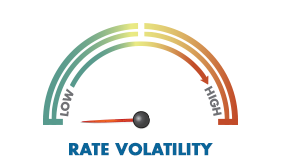
It's all about risk.  Between the times you start your application and the time you close your  loan, interest rates will do what they always do - change.  At times, the rate of change is exceptionally volatile, even from one minute to the next.  "Locking in" your interest rate protects you from the risk of rising rates.  It's just like purchasing an insurance policy.


Risk is not a one-way street, though.  Protecting yourself from rising rates means your transfer that risk to the lender.  In turn, lender must purchase "hedges" to prove protection.  These are financial instruments such as U.S. Treasury Bonds whose values move in the opposite direction of rates.  A hedge can be expensive, and just like other forms of insurance, longer policy periods cost more. As a result, longer locks have higher costs, which are reflected in the cost of your loan.

Risk varies based on the type of loan.  Before you decide whether to avoid or pay the premium for a longer lock, take into account the kind of loan you are considering.  Different loan types may have less volatility in the rate from week to week.  For example, an adjustable rate loan may be tied to a slow moving index rather than the day to day market.  

No one knows with absolute certainty what interest rates will do during your application and approval process.  One thing is certain: Your loan has to be locked before it can close.  For many, the decision is better made based on personal comfort rather than skill in predicting the markets.  If you will be most comfortable knowing your safely locked in, then a longer lock may be less stressful than taking your chances on getting a better rate later.

Whether you choose to lock in early or lock in closer to your closing, we are here to help.  Please do not hesitate to contact us with any questions!

Monday, December 21, 2015

Mortgage Guideline Tip - The Refi Process

Searching for information regarding refinancing? 
I have put together a quick summary of the process from application to closing below.  


The Application
After we determine that a refinance will be beneficial for you, we start the application.  Much like your original mortgage application, this one collects general information and asks for documentation of your income and assets.

Processing
Next, we'll gather property information with an appraisal, title reports, and proof of property insurance.  We'll also request a credit report and verify your income and your assets.

Underwriting & Approval
The underwriter makes sure all loan guidelines are met or exceeded by verifying the information we've provided.  A long checklist of factors must be satisfied during this stage.  Additional documentation may be requested or "conditions" may be placed on the approval.  Ultimately, the underwriter is held responsible for the decision made on a loan and must assure that anyone else picking up the file would come to the same conclusion.

Closing/Funding
After conditions placed on the approval have been satisfied, your loan is cleared for "docs" or closing.  Your closing package will be compiled, a closing disclosure will be approved, and then your closing will be scheduled and completed.  On loans for primary residences, a three-day rescission or waiting period must transpire between closing and the funding of the new loan.  After the rescission, your old loan will be paid off and your new loan will start.

Every property and situation is unique.  Many small steps may occur within the four categories, and even a small issue could temporarily derail the process.  Things may have changed since you originally financed your home, and the documentation needed today may be more extensive than it was when you first purchased your home.  Please realize lenders must take steps to satisfy guidelines that are designed to protect you and everyone else along the way.

If you have questions about the refinancing process, please call or email us today! We are here to help!

Friday, November 20, 2015

The Weekly Wrap Up - 80s Night at the Queen


https://i.eeoo.co/o/407/Assets/bullet_graphic1.png
Fed minutes show that members think the economy can handle a policy rate increase. Over 70% of economists now think the Fed will hike rates in December.
https://i.eeoo.co/o/407/Assets/bullet_graphic1.png
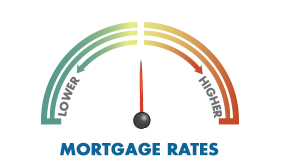
Markets have already started preparing for a Fed policy rate increase in December, contributing to recent mortgage rate increases.

https://i.eeoo.co/o/407/Assets/bullet_graphic1.png
Weakness in retail sales and producer prices make it unlikely that inflation will rise significantly. Low inflation can help mitigate a trend toward rising rates.


World Cafe Live at the Queen
Nov. 21. 2015
6 PM to 11 PM

Time to enjoy the 17th Annual Fall Auction Gala thrown by Autism Delaware.  Go back to the 80s with a fun dance party with live music and a silent auction.  Ticket are $95, which covers the live music, cocktails, food plates, and live and silent auctions.  Proceeds go to support Autism Delaware programs and statewide services.

There is complimentary garage parking in the Renaissance Center Garage of 5th Street, right next to the World Cafe Live.  For more information about the event or Delaware Autism click here...

https://i.eeoo.co/o/407/Assets/bullet_graphic1.png
Housing starts were down in October due to a decline in apartment construction. Overall though, the trend in housing starts has been steadily improving.

https://i.eeoo.co/o/407/Assets/bullet_graphic1.png
Highlighting the housing market's strength, building permits were up 4.1%. Permit activity portends more supply and healthy construction spending.

https://i.eeoo.co/o/407/Assets/bullet_graphic1.png
Homebuilders continue to remain upbeat about the market and outlook for real estate. Strong demand and limited inventory make new homes essential.

Monday, November 16, 2015

Mortgage Guideline Tip - Pre-Qualification vs. Pre-Approval

We often have conversations with our clients regarding the difference between a pre-qualification and a pre-approval.  Some clients believe that these are the same thing.  It is important to know that just because you are pre-qualified does not mean that you are pre-approved.


Pre-qualification
The process to get pre-qualified is extremely simple.  You have short conversation with your lender about your income, credit, and assets.  At this point credit is not pulled, only verbal information is exchanged.  The result of this will allow you, the borrower, to know what kind of housing payment you could be qualified for.  It is important to note that that number is not a definite.  This is because the lender if going off of all verbal information that you are providing to them, nothing is being confirmed. Due to that a pre-qualification does not mean the same thing as a pre-approval.

Pre-Approval
The pre-approval process is also fairly simple, but is more involved than the pre-qualification process.  During this process, information regarding your income and your assets will be collected.  Your credit will be pulled by your lender and then uploaded into an automated underwriting system that will grade your overall risk for the loan.  When this process is completed, you will have a more accurate idea of what you can afford, and you will receive a pre-approval letter for that amount.  You do not get a similar letter during a pre-qualification.  This pre-approval letter will give you purchasing power and you will be able to confidently make an offer on the house that you find that you love.


I hope this paints a clear picture about the difference between a pre-qualification and a pre-approval. 
If you have any questions please call or email me!

Friday, November 13, 2015

The Weekly Wrap Up - A Community Favorite; Wilmington Beer Week


October's jobs report supports speculation the Fed will raise policy rates at the December FOMC meeting. Unemployment improved and job growth surged.

Steady jobless claims this week were further evidence of a healthy labor market and the growing likelihood of the long anticipated Fed policy action.

Mortgage rate markets are already moving in advance of the December Fed meeting. Increases so far are small and can actually motivate buyers to action.

Wilmington Beer Week
Friday Nov. 13th & Saturday Nov. 14th
It is not too late to catch the end of Wilmington's 5th Annual Beer Week!  The week­long celebration will showcase a WBW-record 61 craft brew­eries while featuring din­ners, tap takeovers, meet the brewers and more. Delaware breweries will be promi­nent in that lineup, so look for the latest creations from 16 Mile, 2SP, Dogfish Head, Evolution, Fordham, Mispillion, Third Wave and Twin Lakes. Top regional brew­eries represented include Flying Fish, Heavy Seas, Lancaster, Stoudts, Troegs, Victory and Yards.  This is a great opportunity for residents in Delaware, Maryland, and Pennsylvania to have a fun and relaxing evening! For more information about times and schedules please click here. 


Encouraging potential buyers to move off the fence, rents are increasing in all price brackets. Rents rose an average of 6.2% year-over-year.

A 12% rise in foreclosures in October is attributed to lenders acting before the holiday moratoriums. Foreclosures have been declining steadily for several years.


Purchase mortgage applications appeared unfazed by the recent climb in rates, improving .1% week-to-week. That's an 18% increase over this week last year .

Tuesday, November 10, 2015

Mortgage Guideline Tip - Waiting period for derogatory credit

Several of our clients come to us after some sort of mishap with their credit or previous mortgage.  Whether it was a foreclosure, short sale, or bankruptcy, they all ask the same thing.  When can I purchase again?

It is an important question for the borrower to know so that they can prepare.  The complicated part is that different derogatory credit requires different waiting periods, for different loans.  I have compiled a list that shows the waiting period that is required for each loan.


Conventional Loans
      • Chapter 7 Bankruptcy - 4 year from the discharge or dismissal date
      • Chapter 13 Bankruptcy - 2 years after the discharge date or 4 years from the dismissal date
      • Multiple Bankruptcies - 5 years from the most recent discharge o dismissal date
      • Foreclosure - 7 year waiting period is required, and is measured from the completion date of the foreclosure action as reported on the credit report or other foreclosure documents provided by the borrower
      • Short Sale - 4 year waiting period is required
FHA Loans
      • Chapter 7 Bankruptcy - 2 years from the discharge date
      • Chapter 13 Bankruptcy - 1 year waiting period is required.  Plan must be paid out and discharged prior to closing.
      • Foreclosure - 3 year waiting period from settlement
      • Short Sale - 3 Years waiting period - Extenuating Circumstances apply
VA Loans - 
      • Chapter 7 Bankruptcy - 2 years from discharge date
      • Chapter 13 Bankruptcy - 1 year waiting period.  Plan must be paid out and discharged prior to closing.
      • Foreclosure - 2 year waiting period from settlement
      • Short Sale - 1-2 years waiting period.  If less than 2, a letter of explanation is required from the borrower and supporting documentation to establish an extenuating circumstance and to confirm the short sale was not due to credit negligence or taking advantage of a declining market
USDA - 
      • Chapter 7 Bankruptcy - 3 years since date of discharge
      • Chapter 13 Bankruptcy - 3 years from date of discharge
      • Foreclosure - 3 years since settlement
      • Short Sale -  None
If you are unsure what waiting period you fall into, please call or email me with any questions.